Quick answer: More U.S. households own pets, and younger owners are especially likely to have more than one. For leash, collar and harness brands, this favors product systems with dependable hardware, coordinated sizes and finishes, and clear performance differences instead of one generic clip used across every SKU.
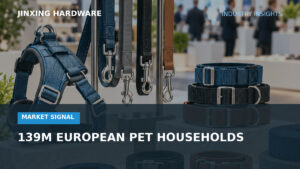
The American Pet Products Association’s 2025 State of the Industry Report said U.S. pet-industry expenditure reached $152 billion in 2024 and projected $157 billion for 2025. APPA also reported 94 million pet-owning U.S. households, up from 82 million in 2023. Seventy percent of Gen Z pet owners had two or more pets.
Why multi-pet ownership changes product design
A household with two or three dogs may need different leash lengths, collar widths and hardware weights. Owners also compare products side by side every day. A heavy hook that feels acceptable on a large-dog leash may be uncomfortable on a lightweight leash, while a small decorative hook may not match the functional expectations of a large-dog product.
This makes hardware architecture more important. Brands can build a family of components with consistent visual language but different internal widths, wire diameters, body dimensions and mechanisms.
Four opportunities for pet brands
1. Build size families, not isolated SKUs
Define small, medium and large hardware around the complete assembly. Match hook weight, ring diameter, buckle width and webbing thickness. Record these relationships in the bill of materials so that future colors and collections remain consistent.
2. Use finish to create a recognizable collection
Multi-pet households often buy coordinated products. A controlled finish standard helps hooks, rings, sliders and buckles look like one set. Approve color references and limit samples because plated or coated parts can vary between batches if appearance criteria are vague.
3. Make daily operation easy to understand
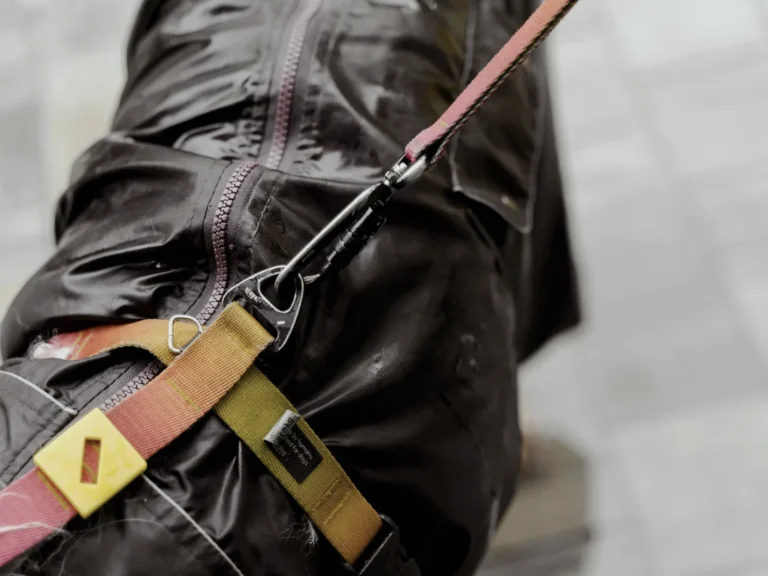
Different users prefer bolt snaps, trigger snaps or carabiner-style clips. The best choice depends on dexterity, glove use, sand or dirt exposure, required security and product weight. Brands should explain the intended use instead of treating every closure as interchangeable.
4. Treat durability as a value message
APPA’s data also shows that owners remain committed to pet spending while paying attention to affordability. A product that operates reliably and resists premature corrosion can justify its price more clearly than a product promoted only by color or styling.
Recommended development sequence
- Define the user, animal size and use environment.
- Select webbing width and thickness.
- Choose the hook mechanism and target component weight.
- Match rings, sliders and buckles to the same webbing system.
- Approve material, finish and color reference.
- Set dimensional, functional and appearance checks.
- Test the complete sewn assembly, not only the loose metal part.
What to send an OEM hardware supplier
Provide a drawing or physical sample, internal width, critical dimensions, material preference, finish, color, estimated quantity, packaging and buyer-defined tests. If a current part is too heavy, difficult to operate or inconsistent in color, state that problem directly. A clear problem statement helps the factory propose a useful modification.
FAQ
Does more pet ownership automatically mean every hardware category will grow?
No. APPA reports market and ownership data. Demand for a particular hook or buckle still depends on brand positioning, product design, price and distribution.
Should a brand use the strongest possible hook on every leash?
Not automatically. Strength, weight, size, ergonomics and webbing compatibility must be balanced for the intended product.
How can brands keep a collection visually consistent?
Use an approved finish reference, limit samples and a documented component family covering hooks, rings, sliders and buckles.
Sources and update note
Reviewed September 2026. Primary reference: APPA 2025 State of the Industry release. Product implications are Jinxing Hardware’s manufacturing analysis.