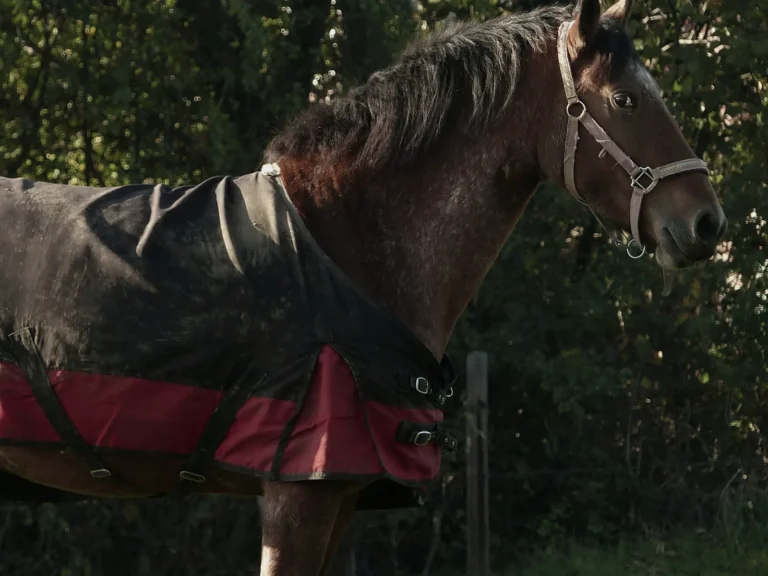
Quick answer: Horse blankets often remain usable when one buckle, hook, D-ring or slider is damaged. Designing these components for replacement can extend service life, simplify after-sales support and give equestrian brands a practical sustainability story based on durability and repair.
Across consumer-product markets, sustainability discussions are moving from general claims toward longer service life, repairability and better product information. The EU Ecodesign for Sustainable Products Regulation provides a broad framework for improving product durability, circularity and information. It does not create a specific universal rule for horse blanket hardware, but it signals why design-for-repair deserves attention.
Why horse blanket hardware is suitable for modular repair
A horse blanket combines textile panels, webbing, stitching and metal or polymer fittings. These elements experience different types of wear. A front buckle may be bent, a surcingle hook may be lost, or a webbing slider may corrode while the main textile body is still serviceable.
If replacement parts are standardized and identifiable, a retailer, repair workshop or owner may be able to restore function without replacing the complete blanket. Whether a repair is appropriate still depends on the condition of the fabric, webbing and stitching and on the brand’s safety instructions.
Five design decisions that improve repairability
1. Standardize internal widths
Choose a controlled set of webbing widths and match buckles, sliders and rings to them. Small differences can cause loose fit, difficult assembly or webbing damage.
2. Keep a component identification system
Use part numbers and drawings for front buckles, D-rings, snap hooks, surcingle fittings and adjusters. A repair part should be identified by dimensions and function, not only by appearance.
3. Control finish and color
Replacement parts should match both performance and appearance. Define the base material, finish type and approved color reference so that service parts do not look unrelated to the original product.
4. Design accessible attachment points
Some components are permanently sewn into complex assemblies; others can be attached through loops or simple stitched sections. Brands should decide which high-wear parts can be serviced without weakening the intended construction.
5. Test the repaired assembly
A replacement component is only one part of the system. Inspect the webbing, stitching and surrounding fabric, then test the complete assembly according to the brand’s defined method.
Recommended replacement-part data
- Part number and drawing revision
- Application location on the blanket
- Internal width and critical dimensions
- Base material and finish
- Compatible webbing size
- Left/right or front/rear orientation where relevant
- Installation and inspection guidance
- Packaging and lot identification
Commercial benefits for equestrian brands
Repair parts can support retailers and strengthen after-sales service. They can also help brands maintain consistency across seasonal color updates. A controlled component platform reduces the need to redesign every buckle and ring for each collection while still allowing visible finish or shape differences.
From the factory side, standardized components improve tooling utilization, sampling speed and repeat-order accuracy. Customization can then focus on the parts that genuinely differentiate the brand, such as a distinctive front closure, logo plate or finish.
Questions to ask a hardware supplier
- Can the supplier match the exact webbing width and thickness?
- Is the drawing revision controlled?
- Which material and finish options suit the use environment?
- Can the supplier maintain approved appearance samples?
- Which dimensional, functional and corrosion tests are available?
- Can replacement parts be packed and labeled separately?
FAQ
Is every damaged horse blanket safe to repair?
No. The full product must be assessed. Damaged structural webbing, torn fabric or failed stitching may require professional repair or retirement according to the brand’s guidance.
What dimensions matter most for replacement buckles and sliders?
Internal width, material thickness, overall geometry and the way the part interfaces with webbing or mating hardware are essential.
Should replacement hardware be stronger than the original?
Not automatically. Changing only one component can move stress to another part of the assembly. Match the approved design and test the complete system.
Sources and update note
Reviewed September 2026. Regulatory trend reference: European Commission — Ecodesign for Sustainable Products Regulation. The horse blanket design recommendations are Jinxing Hardware’s manufacturing analysis and are not a statement that ESPR currently mandates these fittings.