Selecting a metal hardware surface finish is not only about choosing gold, silver, black or another color. The correct finish should match the base material, product application, service environment, appearance standard and expected level of wear.
This guide explains the main factors buyers should confirm when specifying finishes for buckles, hooks, rings, sliders and other small metal hardware components.
Quick Answer
To choose a suitable metal hardware surface finish, first confirm the base material and the final application. Then evaluate appearance, corrosion exposure, abrasion, dimensional fit and testing requirements. Do not specify a finish only by color name, because similar-looking finishes may use different processes and provide different levels of performance.
1. Start With the Application Environment
The same metal buckle may perform differently depending on where and how it is used. Before selecting a finish, describe the actual service environment as clearly as possible.
- Indoor products: Usually require consistent appearance and normal handling resistance.
- Outdoor products: May require additional consideration for rain, humidity and temperature changes.
- Coastal or high-humidity environments: Require a clearly defined corrosion-resistance specification.
- Pet, equestrian and luggage products: May experience repeated movement, friction, sweat, dirt and moisture.
- Decorative products: Often place greater emphasis on color consistency, gloss and surface appearance.
The finish requirement should be based on the real application rather than appearance alone.
2. Confirm the Base Material
A surface finish is applied over a base material. Therefore, the buyer and manufacturer should confirm the base material before deciding on the finishing process.
Common base materials for small hardware components may include steel, stainless steel, zinc alloy, brass or other metal alloys. Not every finishing process is equally suitable for every material.
The base material can affect:
- Coating adhesion
- Corrosion performance
- Surface smoothness
- Product strength
- Final color and gloss
- Production cost
If the material is not confirmed, ask the supplier to recommend an appropriate material-and-finish combination according to the product application.
3. Understand Common Finish Families
| Finish family | Typical purpose | Points to confirm |
|---|---|---|
| Zinc electroplating | Commonly used on iron or steel components for corrosion protection | Coating thickness, passivation, color, appearance and corrosion test requirements |
| Nickel plating | Used for decorative or functional surfaces, including bright or satin appearances | Service environment, coating structure, appearance and wear requirements |
| Zinc-nickel plating | May be considered for applications requiring a more specifically engineered protective system | Required standard, coating thickness, passivation and test method |
| Painted or organic coating | Provides color options and surface coverage | Pretreatment, coating thickness, curing, edge coverage and abrasion resistance |
| Black or antique decorative finish | Creates a specific visual style | Approved sample, acceptable color variation, gloss and protective topcoat |
| Polished or uncoated appearance | Highlights the appearance of the base material | Base material grade, polishing level, surface marks and corrosion environment |
ASTM B633 covers requirements for electrodeposited zinc coatings on iron and steel, including coating thickness, adhesion and corrosion resistance. However, buyers should still define the required coating class and acceptance criteria for their own application.
4. Do Not Use Color as the Only Specification
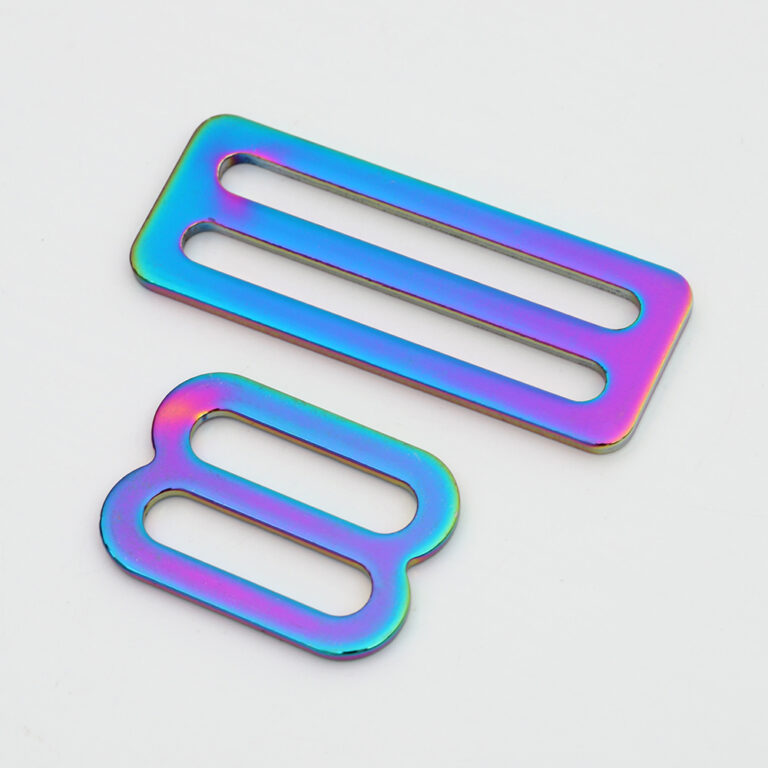
Descriptions such as “silver,” “gold,” “black” or “antique brass” are not complete technical specifications. Two finishes can look similar in photographs but use different materials, coatings or post-treatment processes.
For appearance-sensitive orders, provide:
- A physical reference sample
- A confirmed color sample
- Clear gloss or matte requirements
- Acceptable color variation
- Photos taken under neutral lighting
- Requirements for front, back, edges and recessed areas
Computer screens and product photographs should not be used as the only color approval method.
5. Consider Friction and Repeated Movement
Buckles, rings, hooks and sliders frequently contact webbing, straps or other metal components. Repeated movement can gradually affect the visible surface.
Tell the manufacturer if the component will experience:
- Frequent opening and closing
- Metal-to-metal contact
- Sliding webbing or straps
- Outdoor dirt and moisture
- Repeated cleaning
- Heavy loads or vibration
This information helps the supplier evaluate whether the proposed finish is suitable for the intended use.
6. Check Whether Coating Thickness Affects Fit
Surface treatment adds material to the component. Although the change may be small, coating thickness can affect tight slots, mating parts, threaded areas and closely controlled dimensions.
For products that connect with webbing or another component, confirm:
- Internal slot width after finishing
- Hole diameter after finishing
- Fit between moving components
- Whether contact surfaces require masking
- Whether critical dimensions apply before or after coating
You can also review our Metal Buckle, Hook, Ring and Slider Size Guide before confirming the specification.
7. Define Inspection and Testing Requirements
“Good quality” is not a measurable acceptance standard. Buyers should identify the required inspection method before mass production.
Depending on the product and finish, the inspection plan may include:
- Visual appearance inspection
- Color comparison against an approved sample
- Coating thickness measurement
- Adhesion testing
- Corrosion testing
- Abrasion or wear evaluation
- Dimensional inspection after finishing
- Functional assembly testing
If a salt-spray test is required, specify the test standard, duration, evaluation area and acceptance criteria. Do not rely on an assumed number of hours unless it has been confirmed by both parties.
8. Approve a Sample Before Mass Production
A pre-production sample is especially important when the order involves a custom color, decorative finish or strict appearance standard.
Check the sample for:
- Overall color and gloss
- Visible marks, spots or uneven areas
- Coverage around edges and recessed areas
- Fit with webbing or mating components
- Surface condition after repeated operation
- Consistency with the approved drawing
Keep one approved sample as the reference standard for mass-production inspection.
Information to Include in Your RFQ
When requesting a quotation, include the following information whenever possible:
- Product drawing or clear reference photos
- Base material or required performance
- Dimensions and tolerances
- Required finish and color
- Gloss, matte or antique appearance
- Indoor or outdoor application
- Expected contact with water, sweat or chemicals
- Required inspection or testing standard
- Order quantity
- Packaging requirements
If some information is not yet available, describe the application and ask the manufacturer to suggest options for evaluation.
Frequently Asked Questions
Which metal finish is best for outdoor use?
There is no single finish that is best for every outdoor application. The correct choice depends on the base material, moisture exposure, abrasion, expected service life and required test standard.
Is a black finish automatically corrosion resistant?
No. “Black” describes appearance, not a complete coating specification. Ask what finishing process and protective system are used.
Can the same color be reproduced exactly in every batch?
Production batches may have normal variations. If appearance is critical, establish an approved sample and an acceptable color range before production.
Should I request salt-spray testing?
Request it when corrosion performance is important, but define the test standard, duration and acceptance criteria. Salt-spray results should not be promised without an agreed specification and test report.
Can Jinxing Hardware support custom finishes?
Finish feasibility depends on the component material, geometry, quantity and application requirements. Send your drawings, reference sample or target appearance for evaluation.
Request a Finish Recommendation
Need help selecting a finish for a buckle, hook, ring, slider or custom metal component? Send us the application, dimensions, quantity, target appearance and service environment.
Submit a Custom Hardware Inquiry or contact us to discuss your requirements.
Related Guides
- How to Choose the Right Metal Hardware
- Metal Buckle, Hook, Ring and Slider Size Guide
- How Metal Hardware Is Made
- Browse Metal Hardware Products