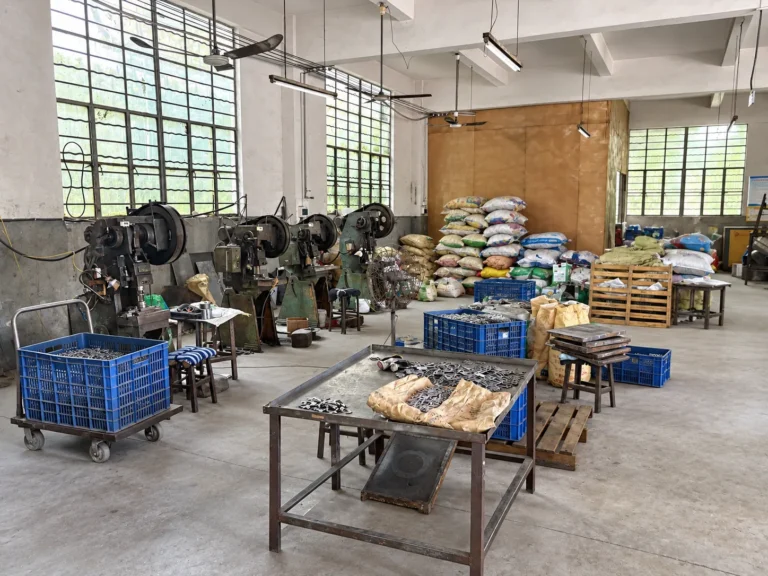
Custom metal hardware manufacturing turns a drawing, physical sample or product idea into production-ready buckles, hooks, rings, sliders and other connecting components.
A successful project depends on more than the manufacturing process itself. Buyers and suppliers must first agree on dimensions, materials, surface finish, functional requirements, inspection methods and packaging.
This guide explains the typical process from the initial inquiry to finished production.
Quick Answer
A typical custom metal hardware project follows these steps:
- Define the product application and requirements
- Provide a drawing, sample or reference image
- Review manufacturing feasibility
- Confirm material, dimensions and finish
- Develop tooling when required
- Produce and inspect samples
- Approve the final specification
- Begin mass production
- Complete in-process and final inspection
- Pack and prepare the order for shipment
The exact process depends on the component geometry, material, quantity, finish and required performance.
1. Define the Product Application
The project should begin with the final use of the component. A buckle used on luggage may have different requirements from a connector used on pet products, horse blankets, furniture or industrial straps.
Tell the manufacturer:
- Where the hardware will be used
- Whether it will be used indoors or outdoors
- The type and width of webbing or strap
- Whether the component will carry a load
- Whether it will experience repeated movement
- Whether it will contact water, sweat, dirt or chemicals
- The required appearance
- The target order quantity
This information helps the manufacturer evaluate the material, structure and production route.
2. Provide a Drawing, Sample or Reference
A dimensioned technical drawing is normally the clearest starting point. If a drawing is unavailable, buyers can provide a physical sample, clear photographs or a basic sketch.
The information should identify:
- Overall length and width
- Wire, plate or material thickness
- Internal opening or slot width
- Hole diameter
- Critical angles and radii
- Moving or connecting areas
- Required tolerances
- Surface finish and color
Critical dimensions should be marked separately. Do not assume every dimension requires the same tolerance.
Review our Metal Buckle, Hook, Ring and Slider Size Guide for help preparing measurements.
3. Manufacturing Feasibility Review
After receiving the product information, the manufacturer reviews whether the proposed design can be produced consistently.
The review may include:
- Suitable material options
- Forming or stamping feasibility
- Tooling requirements
- Risk of deformation or cracking
- Minimum edge distances
- Accessible areas for finishing
- Fit between connected components
- Inspection methods
- Estimated production quantity
If a feature is difficult to manufacture or inspect, the manufacturer may recommend a practical design adjustment. Any change should be confirmed before tooling or production begins.
4. Confirm the Material and Surface Finish
The base material affects strength, forming, appearance, corrosion behavior and cost. The final choice should match the application rather than appearance alone.
The surface finish should also be specified separately from the base material. Buyers may request a particular color or appearance, but the finishing process still needs to be reviewed for the selected material and service environment.
Confirm:
- Base material
- Material thickness or wire diameter
- Finish process when known
- Target color
- Gloss, matte or antique appearance
- Corrosion or wear requirements
- Restricted-substance or compliance requirements
- Approved reference sample
For more information, read our Metal Hardware Surface Finish Guide.
5. Tooling and Mold Development
Tooling may be required for stamped, formed or specially shaped components. The tooling route depends on the product structure and expected order volume.
Before tooling begins, both parties should confirm:
- The final drawing revision
- Critical dimensions
- Material specification
- Expected production quantity
- Tooling ownership when applicable
- Sample approval requirements
- Rules for future drawing changes
Changing the design after tooling has started may increase cost or require tooling modification. The approved drawing should therefore have a clear revision number and date.
6. Produce the First Sample
The first sample is used to determine whether the proposed process can produce the required component.
The sample should be checked against:
- The approved drawing
- Critical dimensions
- Fit with webbing or connected parts
- Opening and closing function
- Surface condition
- Color and finish
- Assembly requirements
A sample that looks correct may still require dimensional or functional verification. Whenever possible, test the sample in the final product.
7. Approve a Production Standard
Before mass production, establish an approved standard that can be used by both buyer and manufacturer.
The approval package may include:
- Approved drawing and revision number
- Approved physical sample
- Material specification
- Finish and color reference
- Critical dimension list
- Functional test requirements
- Inspection and acceptance criteria
- Packaging specification
If the buyer requests a change, the drawing, quotation and sample should be reviewed again before production continues.
8. Mass Production
Once the sample and specification are approved, the order can enter mass production.
Depending on the product, production may involve several stages, such as:
- Material preparation
- Cutting or blanking
- Stamping or forming
- Trimming and deburring
- Assembly or welding when required
- Cleaning and surface preparation
- Surface finishing
- Sorting and inspection
Not every product uses every process. The actual production route should be confirmed for the specific component.
9. In-Process Inspection
Inspection should not be limited to the finished shipment. Checking important characteristics during production can identify problems before the entire batch is completed.
In-process checks may cover:
- Material dimensions
- Tooling condition
- Critical product dimensions
- Shape and deformation
- Burrs and sharp edges
- Assembly movement
- Surface preparation
The inspection frequency should reflect the product risk, production quantity and agreed quality plan.
10. Final Inspection
Finished components should be compared with the approved specification before packaging and shipment.
Final inspection may include:
- Product dimensions
- Appearance and color
- Surface defects
- Coating coverage
- Function and movement
- Fit with a reference strap or component
- Quantity
- Packaging and labeling
When batch sampling is used, the sampling standard, inspection level and acceptance criteria should be agreed before production. If 100% inspection is required for a critical characteristic, it should be stated in the purchase specification.
11. Packaging and Shipment Preparation
Small metal hardware can scratch, rub or become mixed during transportation. Packaging should be designed according to the surface finish, product shape and shipping method.
Packaging requirements may include:
- Quantity per bag or box
- Protective separation between finished parts
- Moisture protection
- Product labels and SKU numbers
- Carton quantity and weight limits
- Pallet requirements
- Shipping marks
Confirm packaging before production is completed, especially when the order contains several sizes, colors or product styles.
What Affects the Production Lead Time?
Custom production lead time depends on several factors:
- Drawing completeness
- Material availability
- Tooling complexity
- Number of sample revisions
- Order quantity
- Surface finishing requirements
- Testing requirements
- Packaging complexity
A reliable schedule can usually be provided only after the drawing, material, finish and quantity have been reviewed.
Custom Metal Hardware RFQ Checklist
Include the following information in your request for quotation:
- Product name and application
- Drawing, sample or clear photographs
- Required dimensions and tolerances
- Base material
- Surface finish and color
- Estimated order quantity
- Functional or load requirements
- Testing and inspection requirements
- Packaging requirements
- Delivery destination
If some information is unavailable, send the application and reference sample first. The missing specifications can then be identified during the review.
Frequently Asked Questions
Can a custom part be produced from a physical sample?
A physical sample can be used as a reference, but dimensions, material, finish and functional requirements should still be confirmed before production.
Is tooling required for every custom product?
No. Tooling requirements depend on the product shape, production method and quantity. Some existing components may only require a different size or finish, while a new geometry may require dedicated tooling.
When should the buyer approve the finish?
The finish should be approved before mass production, preferably using a physical sample under suitable lighting.
Can the design be changed after sample approval?
Yes, but the change may affect tooling, cost, dimensions, performance and lead time. A revised drawing and sample approval may be required.
What should be inspected before shipment?
The inspection should cover the characteristics agreed in the drawing, approved sample, purchase order and quality plan. These may include dimensions, appearance, function, finish, quantity and packaging.
Start a Custom Metal Hardware Project
Jinxing Hardware supplies buckles, hooks, rings, sliders and related metal connecting components for different applications.
Send your drawing, physical sample, reference photos or product requirements for an initial manufacturing review.
Submit a Custom Hardware Inquiry or contact us to discuss your project.
Related Resources
- How to Choose the Right Metal Hardware
- Metal Hardware Size Guide
- Metal Hardware Surface Finish Guide
- Browse Metal Hardware Products